
It’s been on the news.
Cities are even banning it.
Neighbours are upset.
I am of course, talking about the rise of a new technology that has been embraced by all, but particularly youth, that is a real time saver.
I am of course, talking about, e-scooters.
So what is all the fuss about?
As an e-scooter owner myself, I love the thing. It’s a great way to get somewhere quickly without getting out of breath and without fighting to find a parking spot.
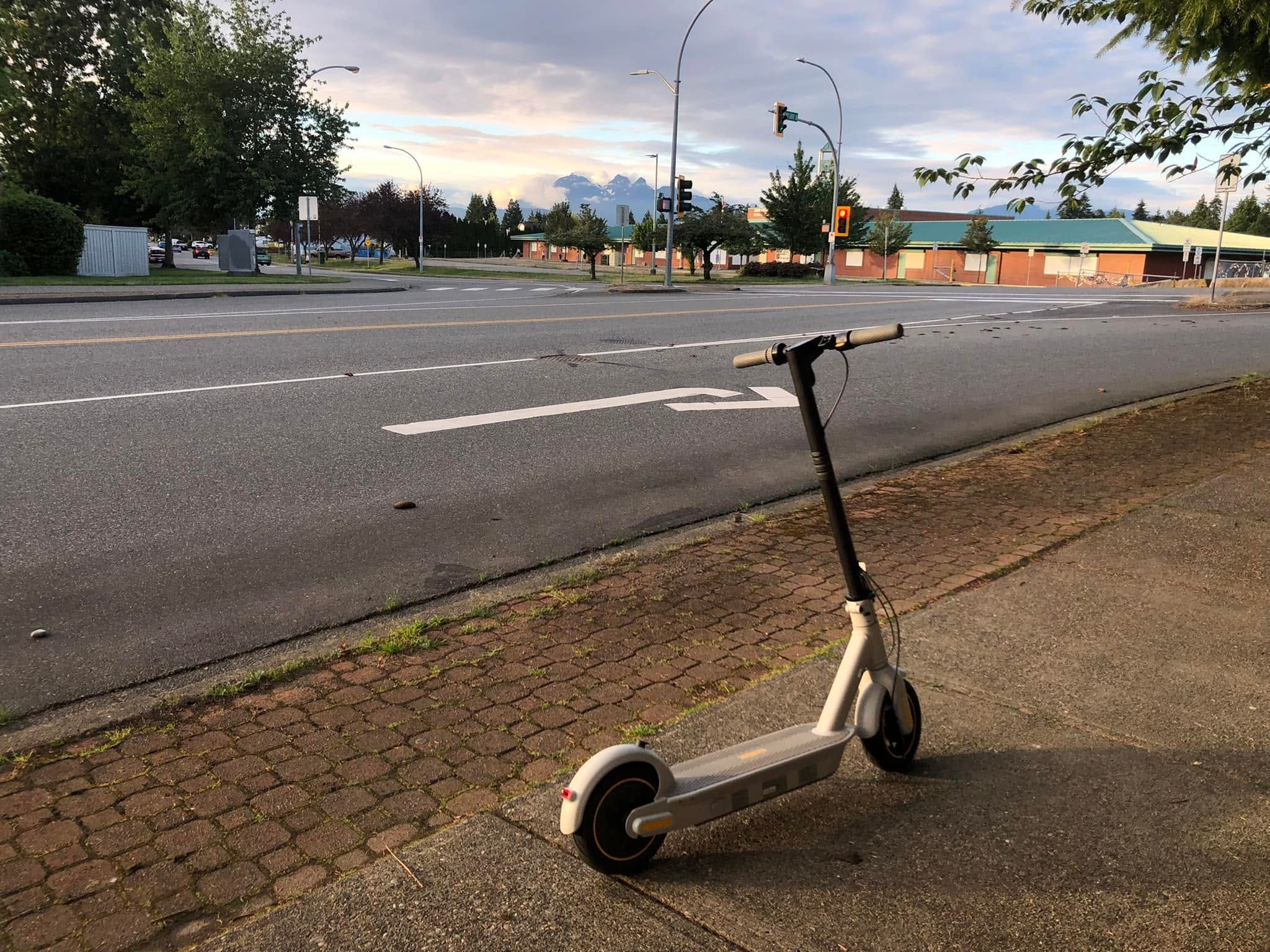
However a quick scroll through many neighbourhood Facebook groups will find neighbours outraged due to potential sidewalk conflicts, rental scooters left strewn about and sometimes just a general “anti-scooter” sentiment.
Some are calling for an outright ban, which has been implemented in some municipalities.
The Cat is Out the Bag
Once a technology is released, then it’s out in the world, reproducible by any number of people or companies and people now want it.
In suburban areas, due to their sprawling nature, the appeal to young people who cannot legally drive is clear, this gives them freedom more akin to car ownership without the car. The current regulations where I live prohibit riding an e-scooter when you’re under 16 - since the driving age is 16, that doesn’t gel with the real-world appeal of these devices.
A ban doesn’t solve what is driving the demand. Maybe more walkable areas and more transit service would, but for existing suburbs those kinds of changes are hard to do logistically and politically.
Human nature
Human’s naturally gravitate towards the easiest option. Why walk 30 mins, or work up a sweat on a bike for 20 mins, when you can just nip there on an e-scooter in 10 minutes?
Sometimes cyclists and micromobility users are seen as activists, but when it comes to e-scooters it’s often simply about being a great transportation choice. You can ride away from noisy traffic, enjoying the open air, you don’t need to find a parking spot, and some scooters fold up so compactly you can bring them inside the store or place you’re visiting, compared to a bike which has to be locked up outside, at risk of being stolen.
Human’s are motivated to prioritize that convenience over safety concerns; we see this with how vehicle collisions are often just accepted as part of daily life, though groups like Vision Zero seek to change that.
Responsible Use and Ownership
Of course, there are limits, users should be responsible and wear a helmet, and not bypass the speed restrictions implemented by the manufacturer. These are guardrails put in for a reason, to keep the owner safe and the public safe. When an e-scooter is not being used responsibly, then there absolutely must be consequences.
Reflective of the AI revolution
What is fascinating is, as someone in the tech industry, the forces at play with e-scooters are eerily similar to how the AI revolution is playing out, with similar forces, factors and responses from the public.
Much like with e-scooters, the cat is out of the bag with AI, and there’s really no going back. The tools are reproducible, accessible, and already in millions of hands. Companies, governments, and schools trying to ban or block them are fighting a losing battle. The demand is real, and it’s grounded in something tangible. People are accomplishing things with AI they couldn’t do before, or doing them in a fraction of the time.
Human nature applies here too. A mechanic doesn’t rebuild an engine by hand when the right tool exists; they use the tool and spend their energy on the diagnosis. AI works the same way. It handles the parts of a task that are repetitive or time-consuming, freeing you to focus on the judgment calls that actually require your experience and knowledge. Critics paint AI users as cutting corners, but the same was said of calculators, GPS, and spell-check. People gravitate toward the tool that gets them where they’re going faster, and when that tool genuinely extends what they’re capable of, that’s not laziness; that’s just working smarter.
Responsible use also matters here too. Just as an e-scooter rider should wear a helmet and try and avoid busy roads, AI users need to be vigilant. Knowing when to trust the output, when to verify it, and when the tool isn’t right for the job are skills worth building. When AI is used irresponsibly, to deceive, to harm, to bypass accountability, there must be consequences.
But the responsibility doesn’t sit with users alone. E-scooter manufacturers build in speed limiters; rental companies use geofencing to slow scooters near crowded areas or prevent them from being abandoned in the middle of a sidewalk. The device itself enforces a baseline of safe behaviour, regardless of what the rider would prefer.
AI companies carry the same obligation. The guardrails built into a model are design choices, not afterthoughts. What it will and won’t do, how transparent it is about its own limitations, how resistant it is to being weaponized for misinformation or manipulation, all of it reflects the values and priorities of the people who built it. A scooter company that disabled its speed limiter to gain a competitive edge would rightly face serious scrutiny. AI companies cutting corners on safety to ship faster deserve the same.
How should we respond?
The point isn’t that new technology is always good or always dangerous. Banning something rarely kills the demand that created it. The better question is what need it’s meeting and how to shape its use so more people benefit and fewer get hurt. That answer has to come from users, companies, and regulators together.
In both cases people have to adapt to this new paradigm. For cities and towns, that means providing safe separated infrastructure for e-scooters, not trying to stomp them out of existence.

For AI, it means updating laws and institutional policies to reflect how people are actually using these tools, giving schools and workplaces the frameworks to treat AI as a skill to develop rather than a threat to contain, and getting serious about integration on society's terms rather than ceding that ground entirely to the companies building it. We worked out that phones belong off the table at dinner but on the desk at work; the same kind of collective norm-setting is coming for AI, and the organizations that engage with that process will shape it better than the ones waiting on the sidelines.
And we need to move quickly.