
When I heard about AMD’s Halo Ryzen AI based mini computer with 128GB of unified memory, I was intrigued. Getting a used M4 Mac Mini with that amount of memory right now is tantamount to the Hunger Games, and the appeal is obvious. Having so much unified memory allows not only larger models, but also much larger context windows.
This is one of the main sticking points when it comes to trying to using existing hardware to build a local AI machine. Even a graphics processor as recent as 3 or 4 years old may only have as little as 4GB of VRAM available, and since context has to be stored in RAM accessible by the GPU for GPU-acceleration, this severely limits it’s capabilities. As such, manufacturers like AMD, and others, are pivoting to a unified RAM model that lets the GPU have fully access to what would have previously just been system RAM.
What is striking however, is the price, $3999.
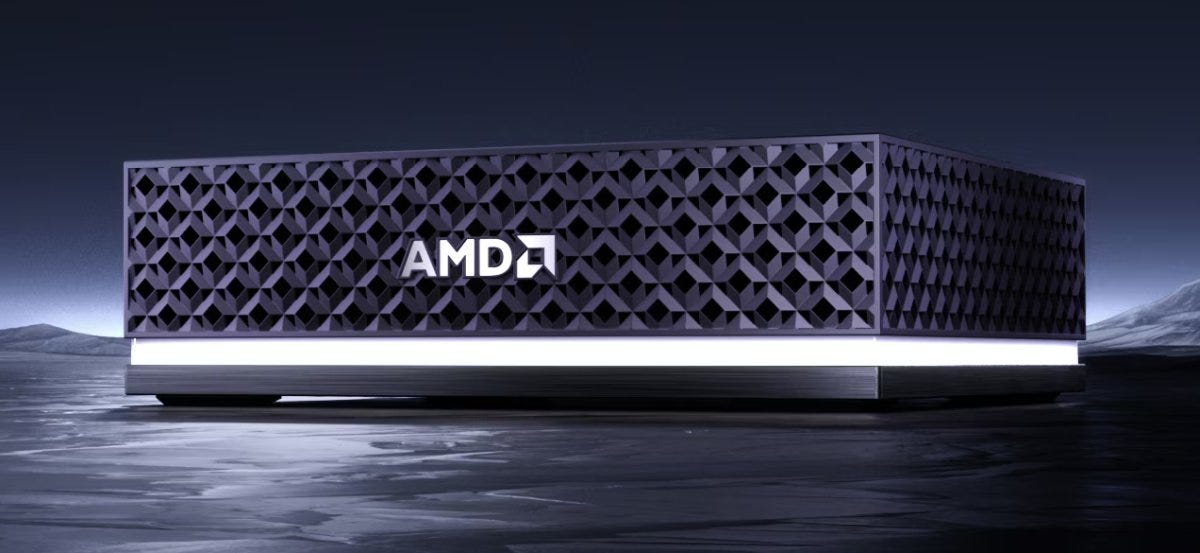
To get in on the ground floor of this Local AI / Unified memory revolution that is happening, it’s going to cost you over $4000 after taxes. Immediately I had flashbacks to the early days of the IBM-compatible PC.
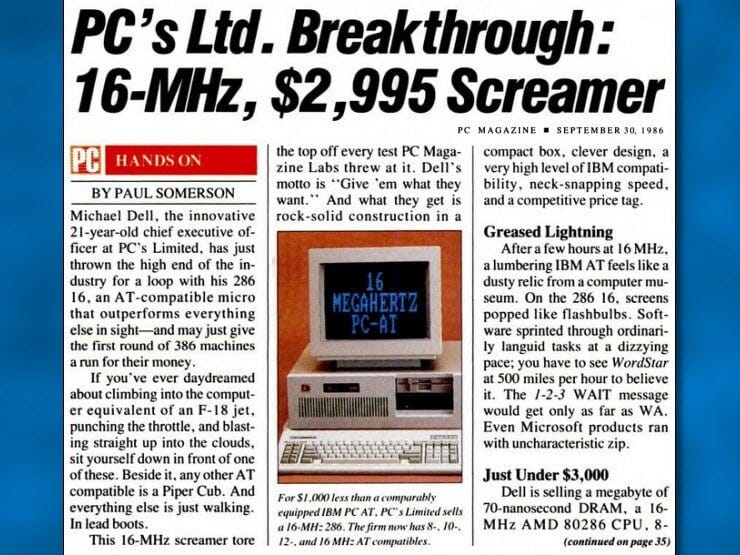
In the mid-80s, to stay ahead in the rapidly developing world of personal computers, you had to shell out a lot of money. And that’s not all. Frequent obsolesce of ordinary PCs was common then in a way that is unfamiliar in the 2020s. I built my current PC in 2020, and is now 6 years old, yet still works very well for everything I need. However, using a PC from 1990 in 1996 would have felt painful and limiting, likely 16-bit compared to 32-bit, unable to run the latest version of Windows.
And we’re seeing similar developments with local AI. Before AMD entered the picture with their own first-party machines, GMKtec has already been using the AMD Ryzen AI platform to build and sell their own. In April 2025 they released the GMKtec EVO-X2, which offered similar specs, only to be made obsolete this month with the EVO-X3 which solves many of the noise and cooling issues and adds an OCuLink output for adding an additional graphics processor, and later on this year AMD will release the sequel to it’s AMD Ryzen AI Max+ 395, the 495. It’s 386 to 486 all over again!
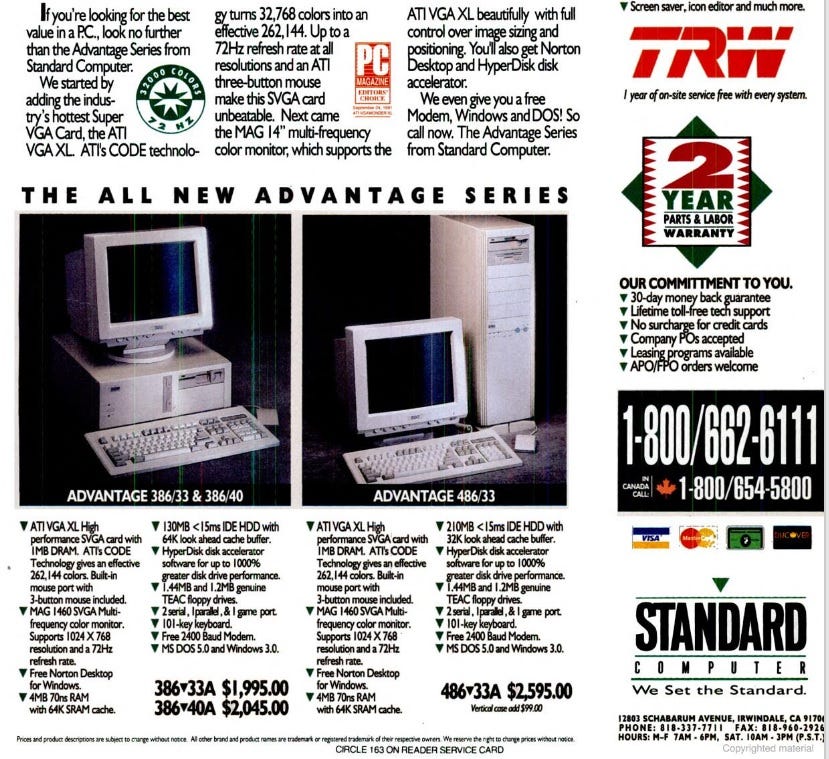
The upshot of all of this is that early adopters of Local AI are paying a heavy premium to get in on the ground floor, and if the pace of development and supply chains is similar to what played out in the 80s-90s, risk being burned with quickly obsolete hardware.
Demand, supply chains and inflated costs are main culprit leading to these large barriers to entry, which some have coined RAMageddon. Once prices stabilize, then costs will come down. And if it follows the trend of home PCs, the price per unit of performance drop will be dramatic.
Berndt, Griliches, and Rappaport's NBER working paper found that quality-adjusted price indexes for PCs declined at about 30% per year on average through the early-to-mid 1990s, with a particularly sharp drop in 1992. Desktop models fell even faster than laptops in that study, at roughly 32% per year versus 24% for mobile models.
However a main differentiator in this race, and what helps those early adopters, is performance increases on the software side - quantization, better attention implementations, and smaller-but-smarter open models mean a task that needed a $2000 GPU in 2023 often runs on a $600 GPU or a Mac Mini in 2025. Dual RTX 5090s now match H100 performance for 70B models at roughly 25% of the cost, and software optimizations through vLLM and TensorRT-LLM provide additional efficiency gains, with some deployments reporting 10x improvement over 2023 baselines.
In the 90s, improvements were nearly all down to the hardware changes, but there were exceptions - PCs for People founded in 1998, and Free Geek founded on Earth Day in the year 2000, would take old “obsolete” PC hardware and install Linux on it; this would squeeze a bit more performance out of these old machines than Windows could.
But on the AI side, these software side improvements are far more universal. You can already get a sense of this just using a local AI model now with the latest llama-server’s mixture-of-experts (MoE) mode to squeeze out performance. On my old 2022 laptop with 16gb RAM and 4gb VRAM, I can run a 30B Qwen Coding model at a reasonable speed, but the context window on the VRAM is really what limits it from doing anything useful on a large project. 64K tokens of context fills up after a few prompts. To me, this is a clear indication that a combination of software improvements, combined with solving the “RAM problem” will lead to widespread local LLM availability in the near future.
It’s an exciting time.